Maijishan Grottoes

Maijishan Grottoes in China
History
The Maijishan Grottoes a series of 194 caves cut in the side of the hill of Majishan in Tianshui, Gansu Province, northwest China. This example of rock cut architecture contains over 7,200 Buddhist sculptures and over 1,000 square meters of murals. Construction began in the Later Qin era (384-417 CE).
Maijishan Mountain is placed on the first list of state key scenic spots by its peculiar grottoes, exquisite clay sculptures luxuriant vegetation, all kinds geologies and landforms, mountain peaks. Its main area is 142km2 including Maijishan Grottoes, the Immortal Cliff, the Stone Gate, Quxi Stream and Jieting Hot Spring. Maijishan Grottoes was first built in Later Qin (384-417.D) constructed successively during the 12 dynasties which are West Qin, Northern Wei, West Wei, Northern Zhou, Sui, Tang, Five Dynasty, Song, Yuan, Ming and Qing. Although many earthquakes and conflagration, it still remains 194 caves, 7200 sculpture, 1000 square M fresco which are excatived on the cliff about 30-80m high form the ground, more than 70 percent caves were excavated in the North dynasty. When clay sculpture were popular, well-shaped and excellent art, They reach the climax of sculpture works in early period. Qinling chains in scenic area are the main boundary between North and South nature geography. There are two plant areas, China-Japan, China-Himalayas areas. They include much kind of plants of North China, Central China, and Himalayas.
Menxinduo Higher plant 223 genera, 873 categories, 2738 species, of which bryophyte plant has 53 genera, 98 categories, 138 species, pteridophyte 21 genera, 43 categories, 92 species, angiosperm 141 genera, 712 categories, 2456 species, gymnosperm 8 genera, 20 categories, 48 species. Preserving Xyophyta 20 species including metase quoia, kinkgo, white bark pine etc. the rare key protected plant listed by state has 31 species, (1 level 1 species, 2 level 7 species, 3 level 23 species), forestation coverage reaches 76% wild animal, birds 12 classes, 34 genera, 95 species, beast 6 classes, 18 genera, 29 species, the rare animals protected by state, 6 classes.7 genera, 18 species.
The scenic spots lies in the joint of QiLian-North Qinlin chains. It forms very complicated geologies and landforms due to movement in Yinzi, Yanshan, and Himalayas. Hot Spring and Quxi Stream is metamorphic rock. Maiji Mountain, the lmmortal clitt, is purple red sandstone rock, while the Stone Gate granite. They have different geology and landform in small area, the abundant forest and flower, the stream and waterfall compose of over 180 scenic spots. They show landscape abundance and variety. The reason of protuberant globular valve: The grottoes kept its fine sculpture of 12 feudal dynasties. It possesses large-scale sculpture museum with 1600 years. It provides precious material studding sculpture, painting, arts and crafts, architecture and religion such as Buddhism. The constructed cave in North Wei (408-534A.D) play an important role for its long history in China even in the world, well preserved well shaped, lively figure. There are biggest palace--shaped building in northern dynasties of Chinese grottoes in these 21 grottoes.
Bulding in wall--painting, skill methods and completed methods are both the best important and valuable works. This abundant building material in northern dynasties is the most precious and important illustration in studying grottoes' nationalism, ancient construction, and freseo. There are about 2738 higher vegetation in the scenic spot, of which 60 genus the 3rd Age xylophta 20 genera, the rare vegetation 31 and 18 genera rare animal protected by State. There is such abundant biology in warm temperature Zone of 34 N latitude; its varieties have typical significance. Maijishan Plant is accepted as member by IUCN. Spectacular Maiji peak, exquisite clay carving temple building under cliff, peculiar landform, about plant clear stream and waterfall combine naturally made up a harmonious landscape of mankind and nature.
Winter Palace

Winter Palace, St. Petersburg, Russia
History
From the 1760s onwards the Winter Palace was the main residence of
the Russian Tsars. Magnificently located on the bank of the Neva River,
this Baroque-style palace is perhaps St. Petersburg’s most impressive
attraction. Many visitors also know it as the main building of the
Hermitage Museum. The green-and-white three-storey palace is a marvel of
Baroque architecture and boasts 1,786 doors, 1,945 windows and 1,057
elegantly and lavishly decorated halls and rooms, many of which are open
to the public. The Winter Palace was built between 1754 and 1762 for Empress Elizabeth, the daughter of Peter the Great. Unfortunately, Elizabeth died before the palace’s completion and only Catherine the Great and her successors were able to enjoy the sumptuous interiors of Elizabeth’s home. Many of the palace’s impressive interiors have been remodeled since then, particularly after 1837, when a huge fire destroyed most of the building. Today the Winter Palace, together with four more buildings arranged side by side along the river embankment, houses the extensive collections of the Hermitage. The Hermitage Museum is the largest art gallery in Russia and is among the largest and most respected art museums in the world.
The museum was founded in 1764 when Catherine the Great purchased a collection of 255 paintings from the German city of Berlin. Today, the Hermitage boasts over 2.7 million exhibits and displays a diverse range of art and artifacts from all over the world and from throughout history (from Ancient Egypt to the early 20th century Europe). The Hermitage’s collections include works by Leonardo da Vinci, Michelangelo, Raphael and Titian, a unique collection of Rembrandts and Rubens, many French Impressionist works by Renoir, Cezanne, Manet, Monet and Pissarro, numerous canvasses by Van Gogh, Matisse, Gaugin and several sculptures by Rodin. The collection is both enormous and diverse and is an essential stop for all those interested in art and history. The experts say that if you were to spend a minute looking at each exhibit on display in the Hermitage, you would need 11 years before you’d seen them all. However, we recommend you opt for a guided tour instead!
Buddha Statue in Leshan

Buddha Statue leshan in china
History
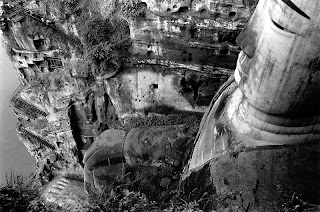
The Leshan Giant Buddha (simplified Chinese: Lesha-n Dafo) was built during the Tang Dynasty (618–907AD). It is carved out of a cliff face that lies at the confluence of the Minjiang, Dadu and Qingyi rivers in the southern part of Sichuan province in China, near the city of Leshan. The stone sculpture faces Mount Emei, with the rivers flowing below his feet. It is the largest carved stone Buddha in the world and it is by far the tallest pre-modern statue in the world. The Mount Emei Scenic Area, including Leshan Giant Buddha Scenic Area has been listed
Pazhassiraja Museum

Pazhassiraja Museum Calicut, Kerala
History
Pazhassiraja Museum is beautifully nestled among the picturesque
locations of the district of Calicut (Kozhikode) in Kerala. Calicut city
has become an ultimate destination for the historians and aficionados
of art and literature. Kerala has lured the visitors and traders from
lands far off from time immemorial. Similar was the case of the
Portuguese traveler, who set sails towards India and reached India in
1498 - the name of that sailor was Vasco Da Gama. An art gallery is
located in the vicinity of the museum. The gallery exhibits a number of
paintings of Kerala's respected artists, including the Raja Ravi Varma
and Raja Raja Varma, who were the connoisseurs of painting and other
performing arts. Their paintings, which are preserved artifacts, tell
the tales from the past that were not included in any scripture, the
lore of then modern culture. They also depict the tradition and bounties
from the wars and successions over the neighboring rulers by the ruler
of Kozhikode. Everything is enlisted in visual history of Kerala, which
is summarized into a few oil paintings of these masters.
Pazhassiraja Museum is maintained and preserved by the State Archaeology Department of Kerala. The museum showcases a number of stunning works of art. The ancient coins preserved here can be a delight to look at. Apart from this, the museum also secures traditional bronze sculptures and utensils, umbrella stones, miniature models of temples which are crafted out of plaster of Paris and similar megalithic structures.
There is an interesting story behind the christening of Pazhassiraja Museum. The museum and the art gallery both are named after the great Pazhassiraja of the Padinjare Kovilakom, of the Kottayam regal kin. The much popular 'Pazhassi Revolt', which took place during the British epoch against the British East India Company, was captained by Pazhassiraja. Popularly termed as the Lion of Kerala, Pazhassiraja is the one who is recognized for introducing guerilla warfare in the hills of Wayanad, to resist the British colonialism. The museum seems to be living entity breathing on the cultural heritage, as it assimilates in itself a number of artifacts and items which are a part of Kerala's intellectual heritage. Not just the artifacts but the architecture of the place itself depict the traditional Keralite architecture and hence are preserved as a part of Kerala's cultural heritage
Pazhassiraja Museum is maintained and preserved by the State Archaeology Department of Kerala. The museum showcases a number of stunning works of art. The ancient coins preserved here can be a delight to look at. Apart from this, the museum also secures traditional bronze sculptures and utensils, umbrella stones, miniature models of temples which are crafted out of plaster of Paris and similar megalithic structures.
There is an interesting story behind the christening of Pazhassiraja Museum. The museum and the art gallery both are named after the great Pazhassiraja of the Padinjare Kovilakom, of the Kottayam regal kin. The much popular 'Pazhassi Revolt', which took place during the British epoch against the British East India Company, was captained by Pazhassiraja. Popularly termed as the Lion of Kerala, Pazhassiraja is the one who is recognized for introducing guerilla warfare in the hills of Wayanad, to resist the British colonialism. The museum seems to be living entity breathing on the cultural heritage, as it assimilates in itself a number of artifacts and items which are a part of Kerala's intellectual heritage. Not just the artifacts but the architecture of the place itself depict the traditional Keralite architecture and hence are preserved as a part of Kerala's cultural heritage
Napier Museum


Napier Museum and Art GalleryThiruvananthapuram, Kerala
History
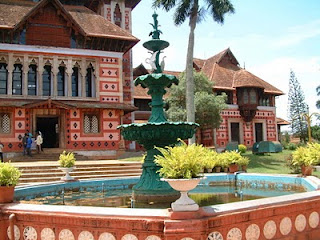
Napier Museum and Art Gallery is a part of the Napier Museum campus,
which is situated in the middle of Trivandrum (Thiruvananthapuram),
Kerala. One should at not miss the tour of this museum, to get a feel of
the authentic cultural heritage of ‘The God's Own Country’. Named after
the former Governor General of Madras, Sir John Napier, the Napier
Museum was constructed in the 19th century. The museum was constructed
in the Indo-Saracenic style. The Napier museum is an abode of a number
of different exotic and rare assortments of archaeological and historic
relics, ancient ornaments, bronze idols, ivory carvings. One can also
find a chariot, which has been designed beautifully with a number of
tribal arts.
Napier Museum & Art Gallery also boasts of maintaining an
ergonomically designed naturally cooled compound, which is designed
according to the principles of physics and architecture. Hence, it saves
a lot of fuel and electricity. The use of plastic has been banned
inside the premises of the museum, which is another thing that makes the
Museum premises eco-friendly. The Napier Museum complex stores a number
of artifacts, which exemplify the prosperous cultural heritage of
Kerala. The museum itself is a wonderful piece of architecture, with its
picturesque green surroundings.
Napier Museum is popularly known as the Government Art Museum. It will
be quite interesting to note that the museum’s building is a rare
amalgamation of the Kerala, Mughal, Chinese and Italian architectural
styles. The Sree Chitra Art Gallery inside the Napier museum features a
rare collection of paintings by Raja Ravi Varma, Roerich and some
fascinating works from the Rajput, Mughal and Tanjore schools of
painting. The museum is also home to an exotic collection of paintings
that are native to Japan, China, Bali and Tibet. This collection offers a
visual treat and acknowledges the art and culture of these countries.
The Museum holds some of the artifacts that clearly exhibit the cultural
harmony between Indian and other cultures. These exhibits are the
evidence of relation between India and the neighboring countries like
China.
Kuthiramalika Museum

Kuthiramalika Museum Trivandrum, Kerala
History
The Kuthiramalika Museum is popularly known as Kuthira Malika, which
literally means a mansion of horses. Located in Trivandrum
(Thiruvananthapuram), Kerala, the museum was originally a grand palace
constructed by Swathi Thirunal Rama Varma - the great connoisseur of art
and literature. The palace is situated in the vicinity of
Padmanabhaswamy Temple. The palace museum derives its name from the
array of horses, which are carved from the wood placed to support its
southern roof.
Kuthiramalika Museum was kept vacant for almost one hundred years,
following the demise of Swathi Thirunal in 1846. Kuthiramalika Palace
was built by the Travancore kings. The Palace still gives an insight
into the Kerala culture and intellect that was contemporary at the time
of its construction. A glance at Kuthiramalika Museum will reveal the
glory and grandeur of the past of the royal families of Kerala. Kuthira
Malika Museum is an abode of the exquisite collections of the Royal
Family's remnants.
Kuthira Malika Museum stores a collection of artifacts which include
Kathakali mannequins that represent the cultural edifice of Kerala.
Belgian mirrors exhibited here represent the trade relations of India
during olden times. The crystal chandeliers and paintings displayed here
represent the taste in art. One can also find armaments here, which
show the marks of military valor of the kings. The museum also exhibits
musical instruments, traditional furniture and other artifacts of olden
times.
Kuthiramalika Museum also stores artifacts which were actually used by
the royal families - the beautifully crafted Ivory cradles of various
shapes and sizes are to name a few. The palace museum also stores a
couple of thrones - one made up of ivory and the other made up of
Bohemian crystal. There is a unique quality in both the thrones, as both
of these have a conch mark on the top of the backrest of the throne.
The Conch used to be the royal emblem of Travancore. The palace is
divided into different rooms, which were used for different purpose.
When it was a palace, Kuthiramalika Museum used to have an audience
chamber. This chamber was used to conduct meetings regarding the routine
to be followed in the empire. A library and an alcove where also
located in the palace. These were used by Swathi Thirunal for
meditating. Many of his famous compositions were also conceived here.
The museum also stores a famous illusion painting of Sree Chithira
Thirunal Balarama Varma which was crafted by the famous painter
Svetoslav Roerich. The major thing to notice in this painting is that
the face and the shoes of the king appear facing the viewer from every
corner of the room.
Technology Museum
Kerala Science and Technology Museum Thiruvananthapuram, Kerala
History
Kerala Science and Technology Museum was established in the year 1984. Located in Thiruvananthapuram/Trivandrum, the capital city of Kerala, the museum is run by an autonomous body, which was setup by the Government of Kerala. The museum remains a dynamic medium for the spread of science and technology in Kerala. Kerala Science and Technology Museum also remains a pioneer in inculcating the sense of curiosity and scientific disposition among the young generation in the state. The Government of Kerala always wanted a body which could organize fairs and scientific exhibitions. They got the answers to their questions in the form of Kerala Science and Technology Museum. The museum also undertakes the responsibility of managing science educational programmes through TV, Radio and other media of communication. The museum is also responsible for organizing demonstrations and lectures, which includes the interactions with media and public too. Kerala Science and Technology Museum is visited by people of all ages and interest, as this is a place of study as well as a recreational center. Here, children can have some creative fun, while the adults interested in science and technology can also enjoy their time here by learning new things. When the project was started, the measurements of the place came down to 5 acres of land at the mid of the capital city of the state of Kerala. The museum compound was set up in 1984 with just a few sections, namely Electricity, Electronics, Power & Motion and Mechanics, with approximately 300 exhibits. A number of galleries like Popular Science, Mathematics, Automobile and Biomedical Engineering were added to the museum with time. Kerala Science and Technology Museum also holds a planetarium called the ‘Priyadarshini Planetarium’. The planetarium was made functional in the year 1994. Further developments took place, which gave rise to a Children's Science Park and Mobile Science Exhibition unit. Later, other galleries were added too to this place, including Computer Gallery and Solar Energy Gallery. Kerala Science and Technology Museum premise also contains a Play Park with thirteen playing devices which aid learning while playing. This park was opened in the year 2005. Energy Park, 3D Theatre, Digital Weighing Machine, Edusat Talk Back Terminal, and Energy Ball etc are hot favorites of the crowd visiting Kerala Science and Technology Museum.
Temple Bar from the Strand by William Henry

Indo Portuguese Museum

Indo Portuguese Museum Fort Kochi, Kochi, Kerala
History
The Indo-Portuguese Museum, which is situated at Fort Kochi in Cochin,
is one of the important museums of Kerala. The museum is an example of
the Portuguese influence in both the art and the architecture of Kerala
in general and Cochin in particular. The Indo-Portuguese Museum tells
the story of the era when Portuguese used to have a strong influence in
this area, at all levels. Be it art or the architecture of the region,
this is the primary reason behind the variety in the designs of the
buildings and monuments.
The Indo-Portuguese Museum is the hub to learn about the Indo-Portuguese Artistic and cultural legacy, which seems prominent as the culture and traditions of Cochin are endeavoring as always and have survived the test of time till today. The museum is the fructification of the efforts of the late Dr. Joseph Kureethra, who was the former Bishop of Kochi district. The other objective of constructing this monument was to accurately bear on the inheritance of his times, so that the upcoming generations could learn something from their experiences. According to critics, another reason for the Bishop to establish the Indo-Portuguese Museum was to protect his own archdiocese from jeopardy. The second reason was to protect the most important and invaluable collections for posterity. The Indo Portuguese Museum holds an important place in the history of Kochi. It is very popular, because it was the first museum in Kerala that especially stored artifacts and scriptures of theological importance.
Indo-Portuguese Museum is divided into five main sections. Each division has been made on the basis of the nature of items displayed. These divisions are made on the basis of routine life namely Altar, Treasure, Procession, Civil Life and Cathedral. All the antiquities which are exhibited here depict the similarity in the Indian and the culture of the Portuguese. The Indo-Portuguese Museum also showcases some exceptionally exotic collections, which are known for their artistic and architectural value. These bear the mark of strong Portuguese influence. The collection includes a chasuble (19th century) from Bishop's House, a piece of the altar made in teak wood (16th century) from the Church of Our Lady of Hope, Indo-Portuguese Monstrance (18-19th century), Processional cross, which is a combination of silver and wood (17th century), from Church of Our Lady of Hope, Vypeen from Santa Cruz Cathedral, Fort Kochi.
The Indo-Portuguese Museum is the hub to learn about the Indo-Portuguese Artistic and cultural legacy, which seems prominent as the culture and traditions of Cochin are endeavoring as always and have survived the test of time till today. The museum is the fructification of the efforts of the late Dr. Joseph Kureethra, who was the former Bishop of Kochi district. The other objective of constructing this monument was to accurately bear on the inheritance of his times, so that the upcoming generations could learn something from their experiences. According to critics, another reason for the Bishop to establish the Indo-Portuguese Museum was to protect his own archdiocese from jeopardy. The second reason was to protect the most important and invaluable collections for posterity. The Indo Portuguese Museum holds an important place in the history of Kochi. It is very popular, because it was the first museum in Kerala that especially stored artifacts and scriptures of theological importance.
Indo-Portuguese Museum is divided into five main sections. Each division has been made on the basis of the nature of items displayed. These divisions are made on the basis of routine life namely Altar, Treasure, Procession, Civil Life and Cathedral. All the antiquities which are exhibited here depict the similarity in the Indian and the culture of the Portuguese. The Indo-Portuguese Museum also showcases some exceptionally exotic collections, which are known for their artistic and architectural value. These bear the mark of strong Portuguese influence. The collection includes a chasuble (19th century) from Bishop's House, a piece of the altar made in teak wood (16th century) from the Church of Our Lady of Hope, Indo-Portuguese Monstrance (18-19th century), Processional cross, which is a combination of silver and wood (17th century), from Church of Our Lady of Hope, Vypeen from Santa Cruz Cathedral, Fort Kochi.
Subscribe to:
Posts (Atom)